
There are several types of circuit breakers, but which are they? What’s the difference between each type? What is their utility? These questions generally arise when you’re about to carry out renovation or electrical installation work. If you want to connect new household appliances, you need to know the basics on the subject. CD Engineering explains the utility of the circuit breaker and its variants. That way, your home electrical installation will no longer hold any secrets for you.
Here are a few points in order to help you understand what a circuit breaker is for. Installed in the electrical panel, a circuit breaker is a protective device that cuts off the current in an electrical circuit to prevent an overload. This not only protects your electrical installations, but it also protects you from electrocution. Therefore its role and utility is to protect.
If you experience repeated power cuts or other problems with your electrical circuits, the problem may be somewhere else. In such cases, it’s best to call in a professional electrician to check the state of your electrical installation. He will then be able to identify the source of the problem and carry out an electrical renovation if necessary.
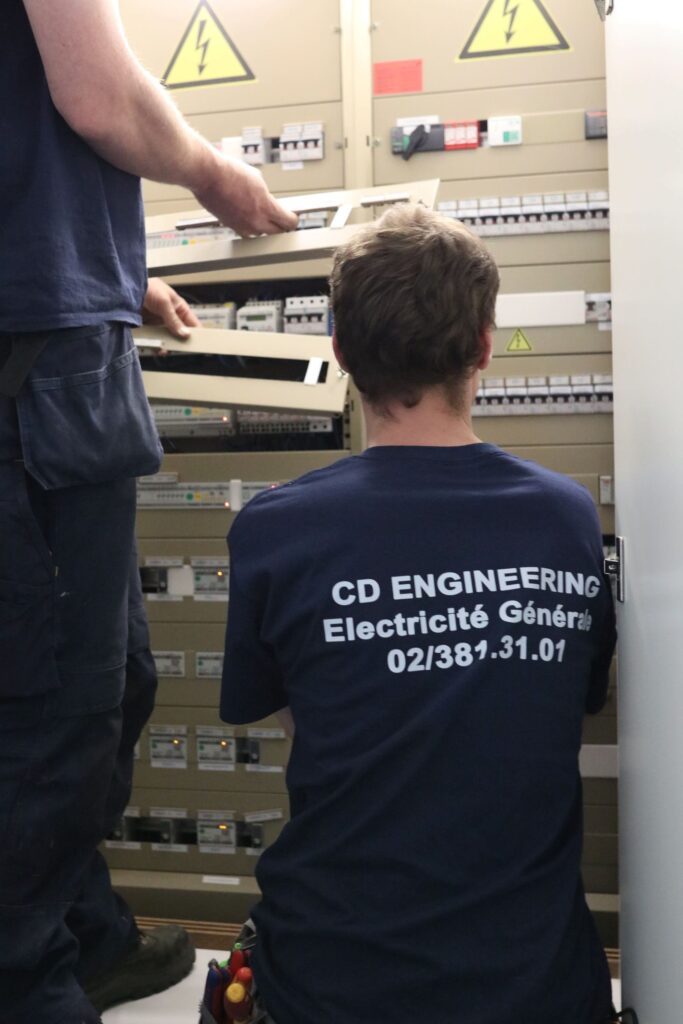
Broadly speaking, there are 5 types of circuit breakers. To begin with, you can find a magnetic circuit breaker. This mainly protects you in the event of a short circuit. Then there’s a thermal circuit breaker, which targets overloads. By combining these two aspects, you’ll find a thermal-magnetic circuit-breaker useful against overloads and short circuits. Finally, the last two are the electrical circuit breaker and the earth leakage circuit breaker, which provide protection against indirect contact in addition to the rest.
The circuit breaker is chosen according to what type of installation it will protect. So if you install one for your lighting circuit, it won’t necessarily be the same as the one for your washing machine, hob or water heater. The choice mainly depends on the power of the current flowing in the circuit to which it is attached. For example, you’ll need to install a circuit-breaker with a maximum rating of 16 amperes for your light circuit and up to 32 amperes for your hob.
Finally, you should respect that each type of circuit breaker must be used for its specific function. Indeed, this complies with a precise electrical standard. This electrical standard ensures that your electrical installation is suitable for your safety.
Once you’ve bought the right circuit breaker, all you need to do is install it. This is a fairly short process, but it does require some electrical expertise. If you’re in any doubt, or if you don’t have the necessary equipment, get help by calling in a qualified electrician. He or she has all the qualifications required to bring your installation up to standard as soon as the circuit breaker is installed. Call on CD Engineering, your electrical expert, without delay and ask for your free quote now.
The circuit breaker is a key protective device in any electrical installation. Its role is to instantly interrupt the current in the event of an overload or short circuit. Several types of circuit breakers fulfil different functions.
Circuit breakers also differ by their tripping curve: type C is suitable for standard domestic circuits, while type D is used for circuits supplying devices that generate high inrush currents at start-up, such as motors. The rating, expressed in amperes, indicates the maximum current the device can withstand before tripping.
CD Engineering handles the installation, replacement and maintenance of all types of circuit breakers.
The information needed to identify a circuit breaker is usually shown on its casing: type, rating in amperes and tripping curve. An indication such as “C16” refers to a type C circuit breaker with a 16‑ampere rating. The marking “30 mA” indicates a residual current device with a sensitivity of 30 milliamperes.
The position of the circuit breaker in the panel also gives useful clues: residual current circuit breakers protect a group of circuits, while miniature/branch circuit breakers each correspond to a specific circuit.
CD Engineering analyses your installation and advises you on the protective devices best suited to your configuration. A diagnostic check ensures that every circuit benefits from appropriate protection.
How useful was this post?
Click on a star to rate it!
Average rating 0 / 5. Vote count: 0
No votes so far! Be the first to rate this post.
Last posts:
Contact us
Bruxelles
Place du champs de Mars, 5
1050 Ixelles
Linkebeek
Chaussée d'Alsemberg, 95
1630 Linkebeek